Homes built 1950–1989
Plumbing for older homes in Lexington & Nicholasville
A lot of Lexington and Nicholasville houses were built between 1950 and 1989, and many still have their original pipes. Those pipes have done their job for 40 to 70 years. Here's what's probably in your walls, the signs it's wearing out, and what fixing it looks like.
Free plumbing inspection and pressure test
Got a house built between 1950 and 1989? We'll check what your pipes are made of and pressure test your water lines, free. Just mention the door hanger when you call.
What's in your walls
What we usually find, by decade
1950s–1960s
Built in the '50s and '60s
Galvanized steel water pipe
Rusts from the inside out. Over time the opening closes up with rust and scale, so you get low pressure and brown water.
Cast iron drains
Usually lasts 50 to 75 years. When it goes, it cracks, rusts through, or the inside gets rough enough that clogs keep coming back.
Clay sewer line to the street
The joints let in tree roots, and the pipe can crack or sag. That's what causes backups in the lowest drain in the house.
1970s
Built in the '70s
Copper and galvanized mixed
Copper water lines were common by then, but many houses still had galvanized sections, especially the main line coming in.
Cast iron drains
Around here, cast iron was still the go-to for drain and vent stacks and main drains. Clay sewer lines to the street were common too.
Original shutoff valves
Valves that are 50 years old often won't close all the way, or start leaking once you turn them. That's a problem when you need to shut the water off fast.
1980s
Built in the '80s
Polybutylene (gray plastic) water pipe
Installed from about 1978 to 1995. It can get brittle and fail without warning, and many insurance companies flag it. Look for gray pipe stamped “PB2110.”
Lead solder on copper joints
Copper joints in homes plumbed before 1986 may have been soldered with lead-based solder.
Cast iron or early plastic drains
In this area, cast iron was still used for drains into the '80s, so many of these houses have it under the slab or in the basement. Where plastic was used, 40-year-old glue joints and traps are often where slow leaks start.
Warning signs
Signs your original plumbing is wearing out
- Low water pressure, especially when two fixtures run at once
- Brown, rusty or metallic-tasting water when you first turn on the tap
- Drains that clog again a few months after being cleared
- Gurgling toilets, or a backup in a basement floor drain or tub
- A soggy strip in the yard, or a water bill that jumps for no reason
- Gray plastic water pipe, or pipe a magnet sticks to (that's galvanized steel)
How we help
What happens when you call
- 1
Free inspection and pressure test
We'll check what your water lines, drains and main shutoff are made of, test your water pressure, and look at the water heater and the main line coming in. Then you get a straight answer about what's fine, what can wait, and what can't.
- 2
Fix the worst part first
You don't always need a whole-house repipe. Often we start with the part that's failing, like a clogged galvanized main or a cracked cast iron section, and give you a plan for the rest.
- 3
Written price before any work
You get a written price before we start, with installment plans available. New water lines are usually PEX, and new drains are PVC. Neither one rusts or scales up.
Real jobs
A recent older-home repipe
Wilmore, KY October 2026
Water service line replacement
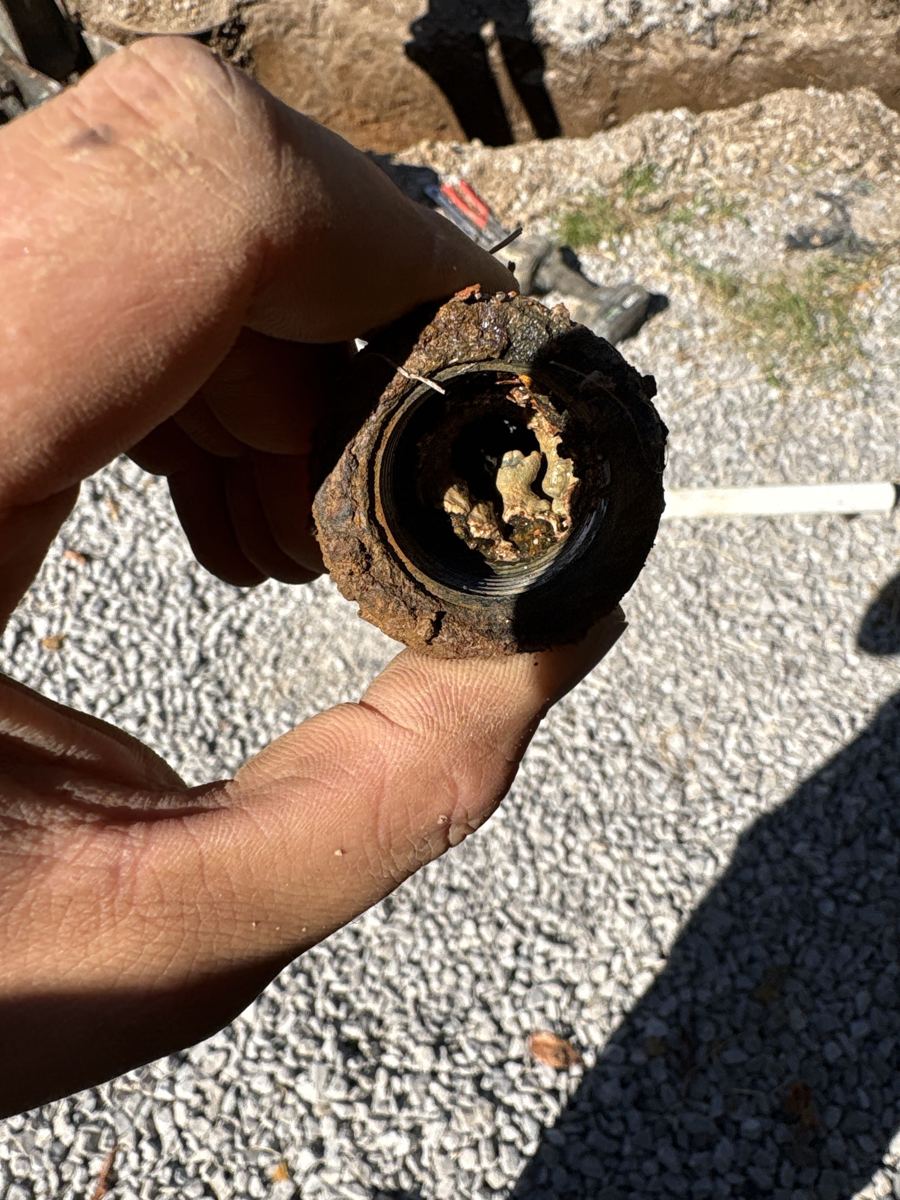
This home's water service line was undersized galvanized pipe, clogged almost shut with corrosion and hard water buildup. We replaced it with a new, properly sized line from the meter to the house.
More about water service lines →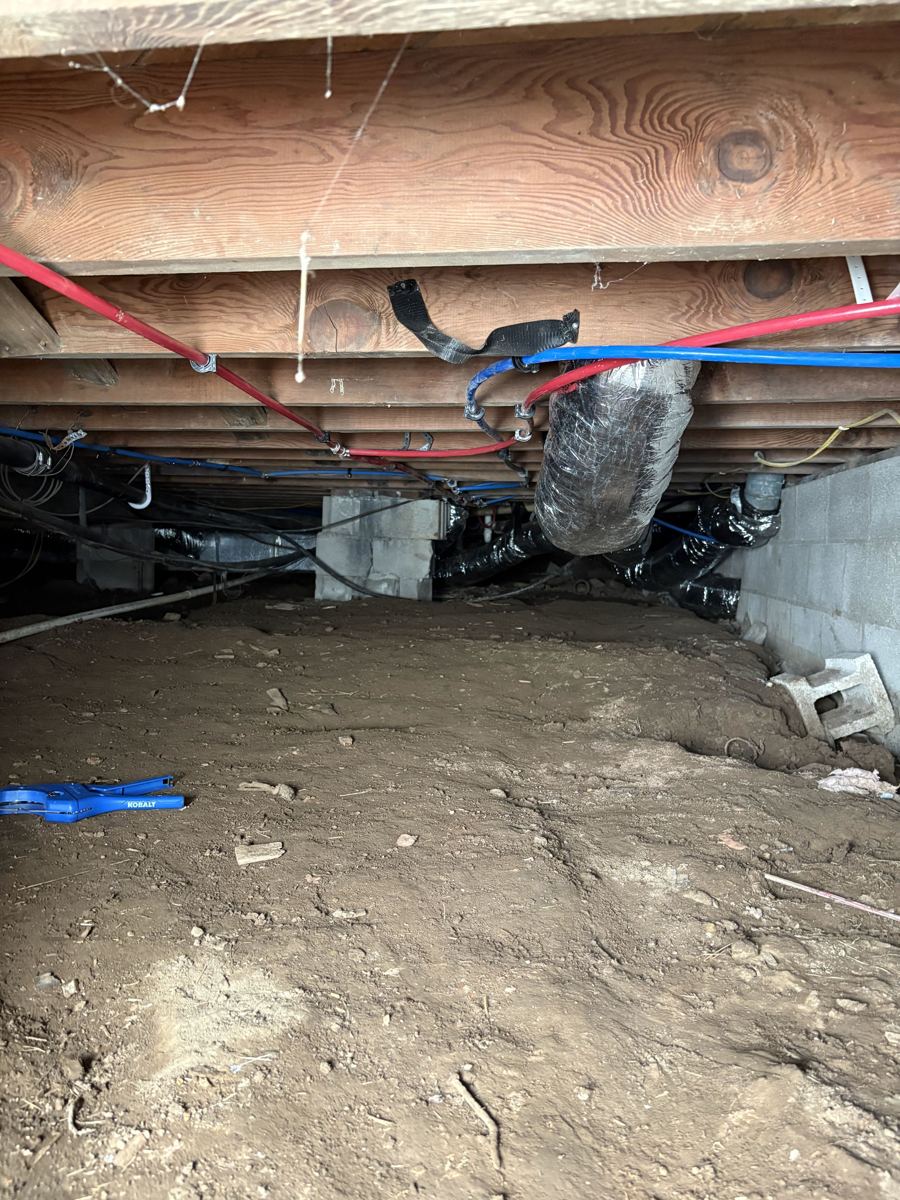
Wilmore, KY October 2026
Galvanized-to-PEX repipe
Same Wilmore house: once the new service was in, we removed the old galvanized supply piping inside the home and repiped it with PEX, which won't rust or scale up the way galvanized does.
More about leak repair →
Neighborhoods
Neighborhoods full of 1950s–80s homes
If you live in one of these neighborhoods, your house was probably built in this period. We work in all of them, and anywhere else in Fayette and Jessamine County too.
Lexington
- Mostly 1950s
- Meadowthorpe · Gardenside · Idle Hour · Southland Park · Hill N Dale · Highlands · Stonewall
- Mostly 1960s
- Garden Springs · Lansdowne · Joyland · Bryan Station · Cardinal Valley · Brigadoon · Pasadena · Eastland · Monticello · Radcliffe / Marlboro · Gainesway
- Mostly 1970s
- Lansdowne-Merrick · East Lake · Tatesbrook · River Park · Open Gates · Lakeview · Plantation
- Mostly 1980s
- Belleau Wood · Cumberland Hill · Squire Oak · Greenbrier · Tanbark · Griffin Gate
Nicholasville
- 1960s–1970s
- Edgewood · Locust Heights · Shannon Park · Rolling Acres · Brittany Heights · Foxwood
- 1980s
- Lone Oak · The Orchard · Kimberly Heights · Westwood · Equestrian Estates · Heritage Estates
Build years come from Fayette County property records and City of Nicholasville utility records. Every neighborhood has some newer homes mixed in.
Questions
Older home plumbing FAQ
- How do I tell if I have galvanized pipe?
- Find where the main water line comes into the house, usually in the basement, crawlspace or near the water heater. Scratch the pipe with a key, then hold a magnet to it. Galvanized steel is dull gray, scratches silver, and the magnet sticks. Copper scratches bright copper and the magnet won't stick.
- What is polybutylene, and should I replace it?
- Polybutylene is a gray (sometimes blue or black) plastic water pipe that was installed from about 1978 to 1995. It can turn brittle and split without warning, and some insurers won't write a policy on a house that has it. If you find it, it's worth planning a replacement before it fails.
- Do I have to repipe the whole house?
- Not always. Sometimes only the main line, or one run of galvanized, is causing the problem. We'll tell you honestly what needs replacing now and what can wait.
- How long does a repipe take?
- It depends on the size of the house and whether it has a basement, a crawlspace or a slab. We'll give you a time frame along with the written price, and we keep the water off for as little time as we can.
- Do you charge to come look?
- No. For homes built between 1950 and 1989, the plumbing inspection and water pressure test are free. Call or book online and we'll set up a time.
Related: water service lines · sewer line repair · leak repair · signs of a failing sewer line
Older house? Let's take a look.
Tell us when your house was built and what you're noticing. We'll give you a straight answer and a written price.